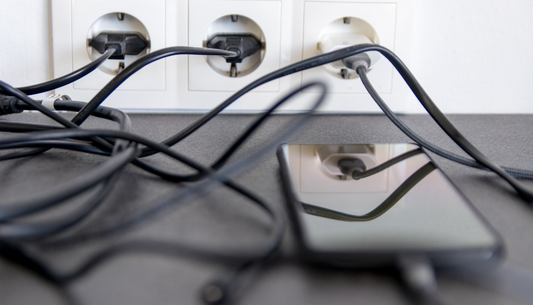
What Should You Look for in a Universal European Travel Charging Setup?
When you arrive in Europe, your devices should work as well as your plans. A good European travel charging setup fixes two big issues for travelers. It deals with different plug shapes and voltages.

The main aim is simple: charge and plug in your daily essentials without carrying too much. In places like hotels, vacation rentals, airports, and quick stops, a universal travel charger adapter is key. It keeps your phone, earbuds, tablet, and laptop charged and ready.
There are two main options. An all-in-one European travel adapter has USB ports and an AC outlet, perfect for charging many items at once. A smaller plug-only option is also good, as it lets you use your own chargers if they fit the local power.
Travel today is all about devices. Phones manage maps, photos, tickets, transit apps, and quick searches. So, charging is essential, not just a nice-to-have. That's why Dohia tech accessories are great, with a focus on simplicity and EU safety standards for use across Europe and more.
Why a universal charging kit matters for travelers in Europe
Many international travelers assume European hotels will provide spare adapters or USB wall ports, but they are rarely available. Arriving after a long flight with your phone at 12% is a stress test no traveler needs. Bringing your own multi-plug charging setup ensures your essential devices are powered and ready from the moment you step into your hotel.

Traveling across borders makes a universal kit even more important. One charger can work in Europe, the UK, or Ireland without needing to change. This means you can keep your charging routine the same, whether you're on a train, in a hotel, or at the airport.
Space in carry-on luggage is limited. A portable charging station can save space by replacing many adapters. A multi-device charging hub lets you charge several items at once, like a phone, earbuds, a power bank, and a camera.
Hotel rooms, even budget ones, can be challenging. You might find only one socket that works, and it could be taken by a lamp or TV. A multi-device charging hub helps you keep the lamp on while charging your devices, without the hassle of searching for outlets.
- Keep one adapter in your personal item for airport connections and lounge time.
- If checked luggage is delayed, you’ll have your charger ready.
- Choose universal plugs to avoid buying adapters at the last minute.
Planning your kit this way makes it more about staying functional. A portable charging station and a compact multi-device hub can make one outlet seem like three. This reduces clutter in your bag.
European outlets and voltage basics travelers must understand
Europe can surprise travelers in two ways: plug shape and voltage. Knowing these can help your devices work right. Also, pick durable travel tech that fits well in old hotel sockets.

Plug adapter vs. voltage converter: what each one actually does
A plug adapter changes the plug shape so it fits European outlets. But, it doesn't change the electricity for your device.
A voltage converter changes the voltage for tools that can't handle local power. But, converters can get hot and are bulky. So, many travelers avoid them unless really needed.
Strict eu safety standards are important. A eu safety standard fast charger can protect against overheating and short circuits in worn outlets.
How to check if your device is dual voltage before you pack
Check your charger's back or the fine print on the power brick. If it says 100–240V, 50/60Hz, it's dual voltage. You just need the right adapter. Look for ac 110-240v universal input for travel-friendly chargers.
- Usually dual voltage: phone chargers, USB-C laptop chargers, tablets, camera battery chargers
- Often a problem: hair dryers, curling or flat irons, heated brushes, electric shavers, small travel appliances
Using a hair straightener at 230V without a converter can melt it fast. Check voltage and wattage for heat tools. Bring a converter only if it's for 110–120V.
Older devices might have a 110/220 switch. Set it to 220 before leaving. Use a solid adapter and durable travel tech for a busy hotel room.
European Travel Charging Setup, Universal Travel Charger Adapter
Getting ready for travel in Europe means knowing the plugs first. A good universal travel charger adapter keeps your devices charged without the hassle of finding the right outlet.
Small detail, big payoff: many European outlets are recessed. A compact adapter body ensures the prongs fit perfectly.
Look for plug coverage across Europe: Type C/E/F plus Type G for the UK & Ireland
For most trips, focus on Type C, E, and F for continental Europe. Add Type G for the UK and Ireland. A reliable adapter should fit these types well.
- Type C: the basic two-round-pin plug used widely across Europe.
- Type E: two round pins plus a grounding pin in the wall socket (common in places like France and Belgium).
- Type F (Schuko): two round pins plus grounding contacts on the sides (common in Germany, Austria, Netherlands, Norway, and Sweden).
- Type G: three rectangular pins for the UK and Ireland, and also Malta and Cyprus.
Places like Spain, Portugal, Greece, Croatia, Czechia, and Hungary use Type C/E/F. If you have a lot of devices, a multi-plug travel charger can save space.
Don’t overlook special cases like Italy, Switzerland/Liechtenstein, and Denmark
Some countries need extra attention, even with universal eu uk us plugs. Italy uses Types C, E, F, and L, with Type L in older buildings.
Switzerland and Liechtenstein use Type J. A slim two-pin Type C often works, but larger grounded Type E/F plugs may not fit, so check your adapter’s grounded support before packing.
Denmark is officially Type K. Two-pin Type C usually works for small electronics, yet grounded devices can require Type K compatibility, depending on the socket.
One simple habit helps: wrap a small strip of electrical tape or duct tape around the adapter-to-plug connection. It makes the setup harder to leave behind in the outlet when you rush out the door.
Power and port selection for multi-device travel charging
Hotel outlets can be hard to find, and the one near the bed is often taken. A multi-port fast charger turns one plug into a charging station for the night. It's important to pick the right ports and enough power for your devices.
How many devices do you realistically need to charge at once?
Start by counting what you plug in each night: phones, smartwatches, earbuds, cameras, tablets, laptops, and power banks. Families and remote workers often need to charge many devices at once.
Even with a multi-device travel power hub, having a second option is wise. Outlets are often far apart, and one unit can't reach both the desk and nightstand. A backup is also useful when someone needs to charge while another is already plugged in.
Prioritize multi-port USB-C + USB-A for flexibility
Choose a charger with USB-C + USB-A ports for flexibility. This way, newer and older cables can use the same outlet. A multi-port usb-c desktop charger is also useful at home and on the go.
When outlets are hidden, a compact hub-style charger keeps things tidy. But remember, more ports don't mean you can charge everything at once. Stick to the manufacturer's limits and avoid overloading a single adapter.
Match wattage to your devices (even laptops)
Wattage can surprise many travelers. Some chargers offer around 20W total USB power, good for one phone fast or several devices slow. Others provide up to 75W total USB power, with some ports delivering 45W.
If you'll be charging a laptop, pick a charger that meets your computer's needs. For heavy workdays, a high-wattage power hub can charge a laptop and phone together, leaving room for smaller items.
GaN fast charging tech and high-wattage options for remote work
Working from home in Europe often means using one outlet for your laptop, phone, and earbuds in a small hotel room. A GaN travel fast charger is a game-changer. It packs more power into a smaller size, keeping your bag light and your desk clear.
GaN fast charging technology is at the heart of it all. It runs cooler and uses less energy than older chargers. This is key when you're on calls back-to-back and need power without a big setup.
The wattage of your charger affects how quickly your devices charge. A 140w pd fast charging adapter can charge many USB-C laptops and top up your phone at the same time. This means you don't have to choose which device to charge first.
For digital nomads traveling with high-performance laptops, tablets, and camera gear, the Dohia 320W 8-Port GaN Desktop Charger provides massive, multi-port output with interchangeable UK/EU power cords—allowing you to fast-charge up to 8 devices simultaneously from a single wall socket without sagging or blocking adjacent outlets. This is important when many devices need power at the same time.
- Wide AC input (often 110–240V) on the charger, so it’s built for European voltage without acting like a converter
- Clear port labels and smart power sharing, so USB-C devices get the watts they need
- An overheat protection charging hub design, so crowded outlets and long sessions feel less risky
Even with the right charger, always check your device's input rating before plugging in abroad. For travelers and remote workers in Europe, Dohia offers all-in-one travel charging solutions. These solutions combine high-power GaN performance, multi-plug versatility, and built-in retractable cables for less clutter and safer daily use.
Cables and portability features that reduce suitcase chaos
Loose cords can make a carry-on a mess. A simple trick is to charge in one spot every night. This keeps your gear organized, even when outlets are hard to find.
Retractable cables for tangle-free travel gear
Retractable cables save space and prevent tangles. They're perfect for travel, as they let you use only what you need. Then, you can quickly wind them back up.
But, there are limits. They don't create new outlets or change voltage. So, you'll need a good USB charger and the right adapter for the wall.
Portable retractable cable charging station concepts
A portable charging station works best as a single spot for charging. Use it with a retractable cable charging pad for easy phone charging. This keeps all your devices in one place.
This setup makes it easier to remember everything when you leave. It's about convenience, not adding more power.
When a compact travel extension cord or multi-device travel power hub helps
In some European rooms, outlets are few and far between. A multi-device travel power hub or a compact travel power station can help. They let you charge without losing the use of other outlets.
- Reach: A short extension can pull the outlet to the nightstand when the wall socket is far away.
- Capacity: Extra AC sockets and USB ports reduce the need to rotate devices overnight.
- Packability: Look for designs that wrap up neatly so they don’t add new clutter.
Remember, extension cords and hubs don't change voltage. Always use the correct adapter for your destination. Make sure every device you connect can handle the local voltage.
Safety, compliance, and build quality for European use
In Europe, chargers must fit the outlets and handle the voltage. They also need to stay cool under load. Many travelers prefer gear built for strict eu safety standards. They avoid cheap, flimsy chargers.
Durable travel tech accessories are better for packing and using in tight spaces.
Before packing, check the tiny label on each charger and device. Single-voltage devices can fail if not used with the right converter in Europe. A good kit has safety features like low-temp overcharge protection and smart shunt safe charging.
For chargers, look for ac 110-240v universal input. This means the charger can accept European voltage. You'll usually see 100–240V and 50/60Hz on the housing. You might only need the right plug adapter for your country.
Small design choices are important when you're on the ground. Many European outlets are recessed. A bulky adapter can sit loose or wobble.
- Fit: Choose a compact body that can seat fully in recessed sockets.
- Stability: A wider face can brace better and reduce sag on the wall.
- Loss prevention: If you tend to forget adapters, a small wrap of electrical or duct tape can keep the adapter attached to your plug.
- Test run: Try your adapters, cables, and bricks at home first, so you can swap anything questionable before departure.
How Dohia simplifies an all-in-one multi-plug European travel setup
Dohia was born in Shanghai with a simple goal: make modern digital life easier. They create thoughtful, minimalist tech accessories that last. For international travelers, this means a compact, highly organized charging setup for every stop across Europe and beyond.
Travel readiness also means safety, not just speed. Dohia products meet EU safety standards. This reduces stress when using European power in older rooms or busy airports. Dohia’s desktop charging hubs utilize interchangeable regional power cords (EU/UK/US), allowing you to power up smoothly during European trips, UK stopovers, or at airport lounges without worrying about heavy charging bricks sagging out of loose wall sockets.
Instead of packing separate charging bricks and tangled cords, Dohia offers a unified multi-device power system. The Dohia 6-in-1 105W GaN Charger Power Combo Tower features two built-in 65W retractable USB-C cables, delivering rapid charging for laptops and phones while keeping your suitcase and nightstand completely clutter-free.
It also solves desktop clutter in space-constrained hotel rooms. The Dohia 25W Qi2 Magnetic Wireless Charger integrates a built-in retractable Type-C cable and smart TEC cooling technology, serving as both a fast wireless charging pad and a steady magnetic phone stand for work or relaxation. Dohia’s all-in-one approach tackles outlet crunch, recessed sockets, and keeps everything within reach when moving city to city.
FAQ
What does a reliable European travel charging setup need to solve for international travelers?
It must handle different plug shapes and voltage across Europe. A good European travel charging setup lets you power several devices easily. This is important in hotels, vacation rentals, airports, and layovers.
Why does a universal charging kit matter for international travelers in Europe?
Traveling today means using phones and batteries a lot. You'll use your phone for maps, photos, and more. A universal travel charger adapter or compact travel power station keeps everything charged, even with limited outlets.
Do European hotels usually provide plug adapters?
Usually, no. Many travelers find adapters rarely provided, even in good hotels. Front desks often have limited spares. So, pack your own European travel adapter to avoid trouble after a long flight.
What’s the difference between a plug adapter and a voltage converter?
A plug adapter or regional power cable changes the physical plug interface so foreign appliances fit European outlets; it does not change voltage. A voltage converter is a separate device that steps voltage up or down for appliances that can’t accept local voltage.
How do I check if my phone charger or laptop charger is dual voltage?
Look at the label on the charger or power brick. If it lists an input like “100–240V, 50/60Hz”, it’s dual voltage and typically fine in Europe with the right plug adapter. If it shows only “110–120V”, it’s single voltage and may need a converter.
Which devices are most likely to need a voltage converter in Europe?
Heat-producing tools and small appliances are common problem devices: hair dryers, curling or flat irons, heated brushes, electric shavers, and some travel kettles. Some are dual voltage, others are not, so verify both voltage and wattage before you pack.
What can happen if I plug a hair straightener into European power without a converter?
It can ruin the tool quickly. Many travelers have experienced the “melting plastic smell” moment when a single-voltage straightener overheats on 220–240V. When in doubt, confirm the label and don’t gamble.
What if my older device has a 110/220 switch?
Check it before departure and set it to 220 for Europe. It’s an easy step to miss, and getting it wrong can damage the device.
Which plug types do I need for most of Europe?
Continental Europe commonly uses Type C, Type E, or Type F (two round pins, with different grounding). The UK and Ireland use Type G (three rectangular pins). A multi-plug travel charger (EU/UK/US) with universal EU UK US plugs is a practical choice for multi-country trips.
Can you explain Type C, E, F, and G in plain English?
Yes. Type C is the basic two-round-pin Euro plug. Type E uses two round pins with a grounding pin in the wall socket. Type F (Schuko) uses two round pins with grounding contacts on the sides. Type G is the UK/Ireland plug with three rectangular pins.
Where are Type C/E/F plugs commonly used?
You’ll commonly see Type C/E/F across France, Germany, Spain, Portugal, Greece, Austria, Belgium, the Netherlands, Croatia, Norway, Sweden, Czechia, Hungary, and much of Italy (with some variations). This is why many travelers build a multi-plug European travel setup around C/E/F coverage.
Are UK-style Type G plugs used anywhere beside the UK and Ireland?
Yes. Malta and Cyprus also use Type G, which is easy to overlook when planning an itinerary.
What special plug cases should I plan for in Italy, Switzerland/Liechtenstein, and Denmark?
Italy can use Types C, E, F, and L, and older buildings may have Type L. Switzerland and Liechtenstein use Type J; slim two-pin Type C often fits, but larger grounded Type E/F plugs may not. Denmark is officially Type K; two-pin Type C usually works for small electronics, but grounded devices may need Type K compatibility.
Do recessed European outlets affect which adapter I should buy?
Yes. Many European sockets are recessed, so the adapter body must be compact enough for prongs to seat fully. A snug fit reduces wobble and helps your universal travel charger adapter stay stable on the wall.
Should I choose an all-in-one adapter with USB ports, or a plug-only adapter?
Both can work. Some travel adapters are all-in-one units with USB ports and an AC outlet, acting like a multi-device travel power hub. Others are smaller plug-only adapters that let you use your own chargers internationally, which can be great if you already carry a trusted GaN brick.
Why is a universal travel adapter better for multi-country itineraries?
It gives you flexibility across regions, like combining continental Europe with the UK/Ireland, or handling international connections. One universal travel adapter takes little space, reduces the number of charging blocks, and helps several devices share one outlet.
Why do people like universal adapters that also work in the U.S.?
A model that includes a U.S. plug option can be useful before the international leg in U.S. hotels, at airport lounges, and during domestic segments. It lets you use the same unit as a compact charging hub from door to door.
What’s the biggest in-room charging problem in Europe?
Outlet scarcity. Some budget rooms have only one outlet, and it may already be used by a lamp. A multi-device charging hub or 6in1 travel power combo station helps keep essentials charging without hunting behind furniture.
What’s a smart habit for airport connections and delayed luggage?
Keep at least one adapter in your personal item. That way you can charge during layovers, and you can function if checked luggage is delayed.
How many devices should I plan to charge each night?
Count what you actually travel with: phones, smartwatches, earbuds or headphones, cameras, tablets, laptops, and portable battery chargers. Families and remote workers often need a true multi-device travel power hub, not a single-port cube.
Is one adapter enough for a family or group?
Often, no. Even if one unit has multiple ports, a second option helps when outlets are spread across the room or someone needs to charge near a different bed. Don’t build your whole trip around one adapter.
What port mix should I prioritize for flexibility?
Look for USB-C + USB-A. USB-C covers newer phones, tablets, and laptops, while USB-A keeps older cables and accessories in play without extra bricks.
How much charging power (watts) do I need for multi-device travel?
It depends on what you charge at the same time. Some multi-port units deliver around 20W total (fine for one device faster or several slower). Higher-output options can offer 75W total or more, with some ports up to 45W for a single device—important for tablets and lighter laptops.
Why does GaN fast charging matter for travel and remote work?
A: GaN fast charging technology is more efficient, which allows smaller chargers that deliver serious power. For remote work, a GaN travel fast charger or travel laptop fast charger can consolidate laptop, tablet, and phone charging into one compact kit.
Do fast chargers work in Europe without a voltage converter?
Many do, as long as the charger supports AC 110–240V universal input (like “100–240V, 50/60Hz”). That’s a charger feature, not a converter feature. You also need the right plug interface, and you must confirm every device’s input ratings before plugging in abroad.
What are retractable cables, and why do travelers like them?
Retractable multi-charging cables help reduce tangles and simplify charging on planes, in airports, and on nightstands. Built-in retractable designs like Dohia’s 105W Power Combo Tower eliminate cable clutter instantly. For direct wired connections, pairing your setup with the Dohia 240W Dynamic Digital Display Type-C Cable provides real-time power monitoring via a TFT screen, ensuring maximum PD3.1 fast charging durability for your premium laptops.
What is a portable retractable cable charging station?
It’s a “one-spot” setup: one hub plus short or retractable cables, so phones, headphones, tablets, and power banks can recharge without cord sprawl. Think of it as a portable travel charging station you can drop on a desk or nightstand for a cleaner routine.
When does a compact travel extension cord help in Europe?
It helps when outlets are behind furniture or far from the bed. A compact extension can add multiple AC outlets and USB ports while wrapping neatly for travel. It does not convert voltage, so every connected device must be voltage-compatible and plugged into the correct adapter.
Can I run multiple high-wattage devices through one adapter or hub?
Be careful. Multiple ports don’t mean you can run multiple high-wattage appliances at the same time. Follow the manufacturer’s limits, and avoid overloading any high-wattage power hub or adapter.
What safety features should I look for in travel charging gear for Europe?
Prioritize products built for strict EU safety standards and protections like overheat control, overcharge control, and stable power management. For peace of mind, choose an EU safety standard fast charger with safeguards such as low-temp overcharge protection and overheat protection charging hub designs.
How can I avoid leaving my adapter behind in the wall?
It happens a lot. A simple trick is to secure the adapter-to-plug connection with a small wrap of electrical or duct tape. It helps keep the pieces together and makes the setup more noticeable at checkout.
What should I test before departure?
Test new adapters, chargers, and cables at home with your real devices. It’s easier to swap a faulty item before a trip than to troubleshoot in a foreign pharmacy or airport shop.
Who is Dohia, and what’s its approach to travel charging?
Dohia—meaning 'loved by all'—was born in Shanghai with a vision to simplify modern digital living. Dohia creates thoughtful, durable tech accessories built strictly to EU safety standards. By combining interchangeable power cords, high-wattage GaN technology, and built-in retractable cables, Dohia delivers sleek charging systems for home, office, and global travel.
How does Dohia simplify an all-in-one multi-plug European travel setup?
Dohia focuses on consolidated travel power: all-in-one travel charging solutions that combine multi-plug versatility with GaN fast charging technology and built-in retractable cables for a cleaner kit. The goal is a dependable multi-device travel power hub you can use in hotels, rentals, and airports without suitcase chaos.
Are high-wattage GaN options useful for heavier travel loads?
Yes. If you travel with a laptop, tablet, and phone, higher-wattage gear can recharge devices faster and at the same time. Depending on your needs, that can mean anything from a 140W PD fast charging adapter for a laptop-focused kit to a multi-port USB-C desktop charger style hub for a room-based setup.
What should I know about very high-power chargers like a 320W GaN charger?
A 320W GaN charger is built for users who want a high-capacity charging station to power many devices at once. Even with high output, you need the correct plug type for the country, and you must respect total power limits and device compatibility—high power improves convenience, not voltage conversion.